In short
Noise is the first sign of wear on a garage door. In West Hartford, a technician checks the balance, tightens and lubricates the hardware, inspects springs and cables and tests the safety reverse. Don't adjust springs or cables yourself.
Wear and weather in West Hartford
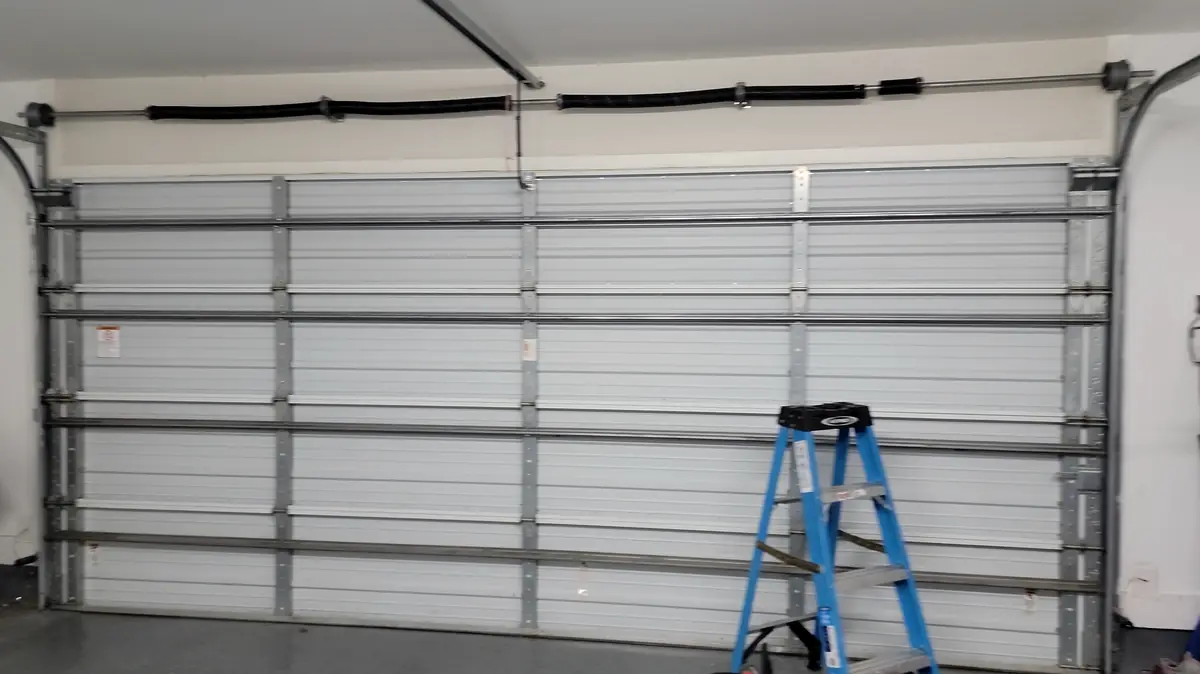
West Hartford's 1920s garages have wood or early steel doors on hardware that has been repaired many times, in buildings that have settled. Doors rub, tracks are out of plumb, and springs of the old extension type should have safety cables through them; a tune-up there starts with checking that they do. In the 1950s neighborhoods near Bishops Corner and on the west side, steel doors run on worn steel rollers and are loud under bedrooms. Hartford-area winters are cold and salty: lubricant stiffens, seals freeze to the slab, and bottom brackets rust. West-facing doors dry out in afternoon sun. A service visit in October prevents most January failures here.
Noises worth acting on
A garage door should sound about the same every day. A change is the signal.
- Louder than last year: rollers and hinges are wearing or dry.
- Jerky movement with a shudder: the door is binding in the tracks or is out of balance.
- The opener strains or hums longer: the springs have weakened and the motor is lifting more than it should.
- Clicking at one spot in the travel: a cracked hinge or a flat-spotted roller.
Simple upkeep between visits
Three things are safe for any homeowner: lubricating the hinges and rollers with a product made for garage doors, wiping the tracks and the sensor lenses clean, and testing that the door reverses when it meets an obstacle or when the sensor beam is broken.
Three things are not: adjusting springs, loosening the bottom brackets where the cables attach, and removing a section's hinges while the door is under tension. Those are where injuries happen.
What a tune-up covers
The technician checks the door's balance and adjusts spring tension, tightens the hardware, inspects cables, rollers, hinges and bearings, lubricates the moving parts, aligns the tracks if needed, and tests the opener's travel, force and safety reverse. Worn parts are pointed out, and you decide what to replace. You hear the price before any work starts.
Around West Hartford
- Elmwood: The south side along New Britain Avenue, with capes and ranches from the post-war years.
- Bishops Corner: The north side around North Main and Albany Avenue, mostly 1940s-60s houses with attached garages.
See the full West Hartford service area.